
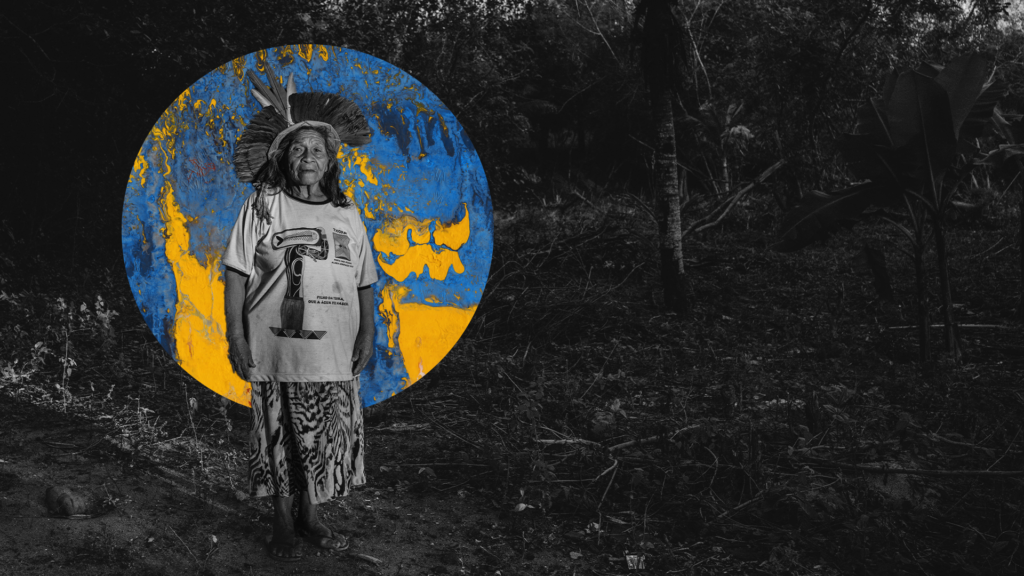
The Climate Action Institute has filed an amicus curiae brief with the Federal Supreme Court (STF) in the "temporal marker" case. The request, which is yet to be analyzed by the STF, stresses that the demarcation of indigenous lands is not limited to the issue of constitutional rights, but also covers crucial aspects of climate justice. The preservation of these lands is vital for maintaining a balanced environment, essential for the sustainability of present and future generations.
The request was presented in Declaratory Actions of Unconstitutionality (ADIs) No. 7582, 7583 and 7586 and Declaratory Action of Constitutionality (ADC) No. 87, which concern Law No. 14.701/2023, known as the Temporary Framework Law.
It is worth noting that, in 2023, the Supreme Court ruled on Extraordinary Appeal (RE) No. 1017365, declaring the so-called "temporal milestone" thesis unconstitutional. The Court stated that the territorial rights of indigenous peoples cannot be restricted to the date of promulgation of the 1988 Federal Constitution. This decision highlights the importance of protecting indigenous lands for preserving ecosystems and mitigating climate change. Given this interpretation, Law 14.701/2023, by restricting indigenous territorial rights on the basis of the Temporal Framework, is intrinsically unconstitutional.
The Climate Action Institute's petition, which is against the "temporal milestone" and in favor of the Indigenato Theory, emphasizes that the demarcation of indigenous lands is crucial for the survival of these communities, protecting them from invasions, conflicts and cultural destruction. In addition, these lands play an essential role in preventing deforestation and fires, thanks to traditional management practices that avoid environmental degradation. The demonstration also highlights the need to include indigenous communities in decisions affecting their lands and rights, guaranteeing the preservation of their sustainable practices and promoting the protection of both indigenous rights and the environment.
Read the amicus curiae brief below: