
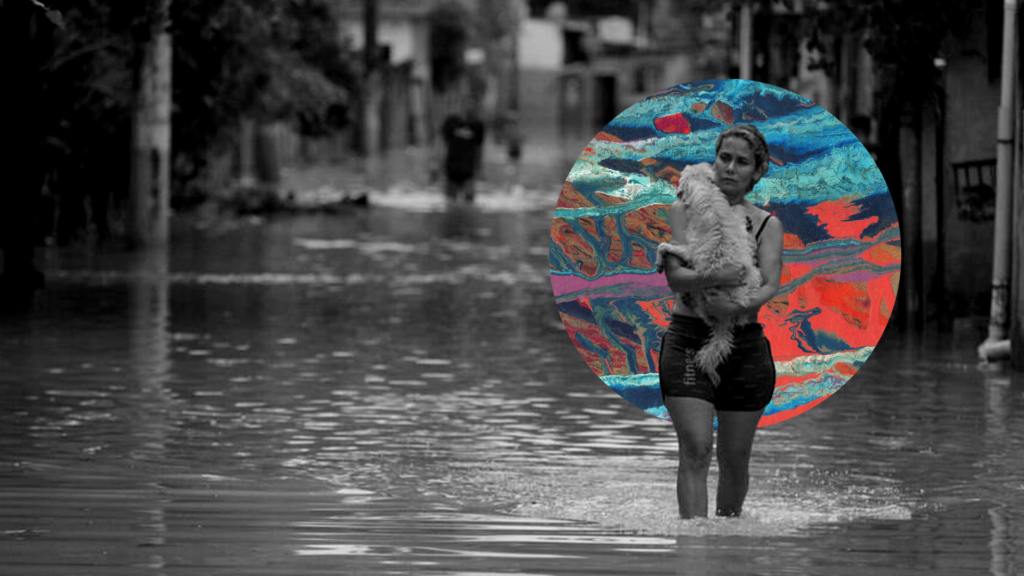
On May 15, 2024, 70 civil society organizations, including the Climate Action Institute, filed a complaint with the Rio de Janeiro Public Prosecutor's Office (MPRJ) against the state government, reporting failures in the planning and implementation of climate change mitigation, adaptation and resilience measures. According to Casa Fluminense, one of the organizations responsible for the complaint, the situation is alarming: one in five homes in the metropolitan region is located in areas at high risk of flooding, and one in 100 faces a high risk of landslides.
Data from the Civil Defense Integrated Disaster Information System reveals a worrying scenario. Between 2020 and 2023, 140 deaths, 690 injuries, 1,942 people fell ill, 8,813 were left homeless, 145,077 were displaced, 229 disappeared, and at least 3 million people were affected in the state. The municipalities of Magé, Guapimirim, Paracambi, Duque de Caxias and Mesquita were identified as the most vulnerable to flooding in the metropolitan region.
The complaint also points out that more than 60,000 homes are in areas at high risk of landslides. The Parliamentary Front for Climate Justice pointed out a series of flaws in state management: the State Plan on Climate Change does not exist, the Climate Change Forum has been paralyzed (it is expected to be reactivated this year), there have been no emissions inventories since 2015, and there is no State Information System on Climate Change. Despite advances in environmental licensing, measures to mitigate emissions have not been effectively applied.
In the metropolitan region, the situation is critical, as only the capital has a climate plan. Of the 22 municipalities, 11 don't have an accessible civil defense contingency plan, 10 have outdated master plans, 4 don't have a sanitation plan, 13 don't have a solid waste plan, and 14 don't have a mobility plan. In addition, the State Fund for Environmental Control (FECAM) and the State Fund for Housing and Social Interest (FEHIS), which are crucial for climate action and social housing, are being underutilized and face continuous cuts, weakening climate and social initiatives due to legislative changes and untying of funds.
The organizations are calling on the state and municipalities of Rio de Janeiro to update their emissions inventories, develop climate mitigation and adaptation plans, re-establish the Climate Change Forum and ensure that resources are properly allocated to the FECAM and FEHIS funds. The complaint reinforces the extreme vulnerability of the populations of the metropolitan region of Rio de Janeiro and the urgency of mitigation and adaptation measures by the Union, States and Municipalities throughout Brazil.
Read the representation below: